

The Courage to Show Up: Why Vulnerability Makes You a Stronger Creator
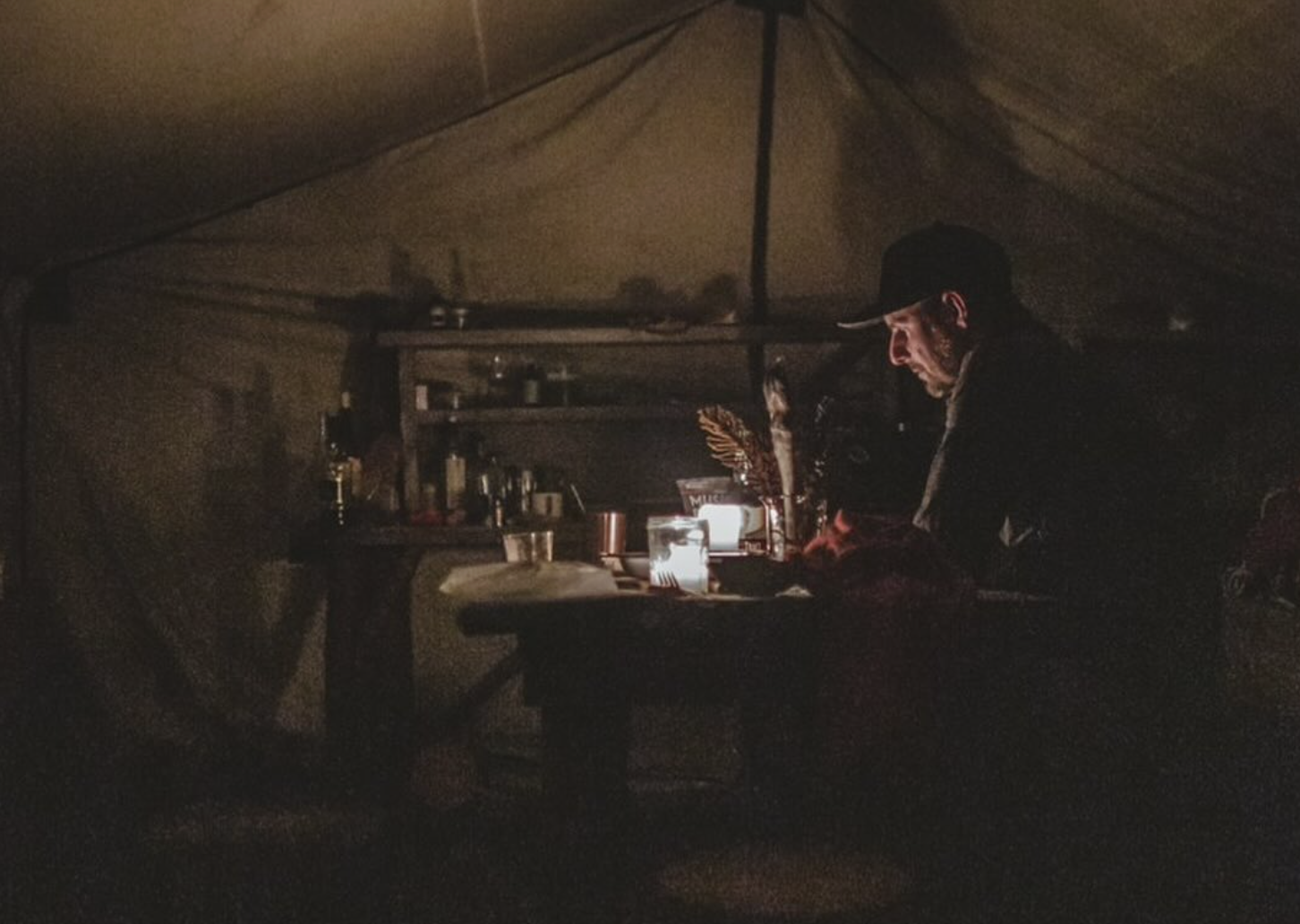
There’s a moment that tends to show up somewhere in the middle of most creative projects where you realize you’re standing at a bit of a crossroads. One path leads toward safety — toward something that looks good, functions well, and satisfies the technical expectations of the craft. The other path asks a little more of you. It asks you to lean in and let the work reveal something that might not feel quite as polished, but is far more honest.
For a long time I gravitated toward the safer route without really noticing it. As creatives, we spend years refining the technical side of what we do. We learn how light behaves, how movement affects a frame, and how composition can guide a viewer’s eye. Those skills matter. They’re the foundation of good filmmaking.
But over time I started noticing something interesting. The projects that stayed with people weren’t always the ones that were technically perfect.
They were the ones that carried something human inside them.
And more often than not, that human element came from vulnerability.
Why Vulnerability Matters in Visual Storytelling
When people talk about vulnerability in filmmaking or photography, the conversation usually centres around the person in front of the camera. We hope our subjects trust us enough to open up and reveal something real. Anyone who has filmed an interview or spent time photographing someone knows that moment when a person finally relaxes and stops performing.
That’s usually when the real story begins.
But what took me longer to realize is that vulnerability isn’t only something we ask from the people we film. It’s something we bring to the work ourselves.
Every story we tell is shaped by who we are and what we’re experiencing in that season of life. The camera may feel objective, but the person holding it never truly is. The decisions we make, where we stand, when we roll, what moments we linger on are always influenced by our own curiosity and perspective.
The more comfortable you become with that reality, the more depth tends to show up in the frame.
Most audiences won’t be able to explain exactly why a moment resonates with them, but they can feel when the person behind the camera genuinely cares about what they’re capturing.
Technical Excellence Isn’t the Same as Emotional Impact
I care deeply about the technical side of filmmaking. I’ve spent a lot of time over the years experimenting with different approaches to light, motion, lenses, and camera systems. Understanding those tools gives you the freedom to shape a story intentionally.
But technical excellence alone doesn’t move people.
You can shoot in beautiful light, expose every frame correctly, and capture smooth cinematic movement — and still end up with something that feels strangely empty. Most filmmakers have experienced that at some point. I know I have.
What’s usually missing in those situations is the emotional centre of the moment.
That emotional centre tends to appear when you allow yourself to stay present with what’s unfolding rather than trying to control every detail of it. It’s the difference between capturing a shot and witnessing something happening in front of you. And witnessing something fully requires a certain openness, because it asks you to allow the moment to affect you too.
The Rhythm of Return
That idea became very real for me while creating The Rhythm of Return. The film wasn’t just another project on a production schedule. It became something much more personal than that.
At its core, the project explores themes of time, presence, fatherhood, and the rhythm of creative life. It’s essentially a reflection on what it means to slow down and return to the things that actually matter when the world constantly pushes you to keep producing and moving forward.
Working on the film forced me to sit with some questions I’d been quietly circling for years. Questions about balance, about the tension between ambition and presence, and about what success actually looks like when you pause long enough to evaluate it honestly.
There were moments during production where it would have been easy to steer the film toward safer ground. I could have leaned harder into cinematic aesthetics and kept the deeper reflections in the background. That approach might have produced something visually impressive, but it wouldn’t have reflected where I truly was in life at that time.
The strength of The Rhythm of Return ultimately came from allowing those reflections to remain part of the story.
And that required a level of honesty that felt unfamiliar at first.
Vulnerability Builds Trust — On and Off Camera
One of the things I’ve come to appreciate over time is how much vulnerability shapes the environment in which a project is created, not just the final result.
When you show up on set willing to admit uncertainty, willing to listen, and willing to explore ideas collaboratively, the tone of the whole production shifts. People stop trying to perform and instead begin to relax into the process.
Some of the best interviews I’ve filmed happened because the subject simply felt safe enough to be themselves. That kind of trust doesn’t appear instantly and it certainly can’t be forced through technique alone. It grows when people sense that the person behind the camera is genuinely present. And presence often begins with vulnerability.
Gear as an Extension of Trust
Interestingly, the tools we use can either support that presence or interrupt it.
One of the reasons I’ve come to value systems like the Nikon Z series is that they allow me to focus less on the mechanics of the camera and more on the moment unfolding in front of it. When your gear becomes intuitive and dependable, it fades into the background of the creative process. That may sound like a small thing, but it changes everything.
The last place you want to be digging through menus or troubleshooting settings is during the moment someone finally opens up in front of the camera. When the technology simply works, you’re free to stay engaged with the story itself. And that freedom creates space for deeper storytelling.
The Risk of Being Seen
Of course, creating from a place of vulnerability always carries a bit of risk.
Not everyone will resonate with what you’re trying to say. Some viewers may interpret your work differently than you intended, and occasionally you may reveal something about yourself that feels more personal than you expected. But the alternative — staying safely within what feels comfortable — tends to lead to creative stagnation.
If we only create what feels safe, the work can slowly lose its sense of exploration. It may remain technically strong, but it stops evolving emotionally. The projects that challenge you — the ones that push slightly beyond your comfort zone — are often the ones that shape your voice the most. And your voice is ultimately the one thing no one else can replicate.
A Practice, Not a Performance
Over time I’ve come to see vulnerability less as a dramatic act and more as a quiet practice that develops gradually. It’s the willingness to let your work reflect where you actually are in life instead of where you think you’re supposed to be.
When you approach creativity this way, your body of work begins to form a kind of continuity. Each project builds on the last not because you’re chasing a particular style, but because the work reflects your ongoing evolution as a person. And that kind of authenticity is difficult to manufacture.
Create What You Actually Believe In
At the end of the day, vulnerability isn’t about turning every project into a personal confession. It’s about alignment. It’s about allowing the work you create to reflect what you genuinely care about and the questions you’re honestly exploring. When that alignment exists, something interesting happens. The work begins to carry weight. It becomes more than just another piece of content moving through someone’s feed. It becomes part of a larger story — both for the audience experiencing it and for the creator making it. And that kind of work tends to last.
So the next time you’re standing behind the camera and faced with that quiet decision about how far to push a project, it may be worth asking yourself a simple question: Am I protecting myself here? … Or am I allowing this story to shape me as well? Because sometimes the strongest thing you can do as a creator isn’t to hide behind perfection. It’s to let yourself be seen.