

Finding Your Rhythm

Over the past few years, I’ve tried more systems than I can count.
Different routines. Different productivity frameworks. Different ways of organizing my days so that work, family, health, and the hundred other moving pieces of life could somehow fit together cleanly. Like most people who build things for a living, I’m drawn to the idea that if you design the right structure, life will begin to cooperate with it.
For a while, that belief worked.
There were stretches where everything moved forward quickly—projects building momentum, ideas flowing, travel filling the calendar, and the rhythm of work feeling almost effortless. It’s easy during those seasons to believe you’ve finally figured it out.
And then life reminds you that systems are fragile.
There were moments when the pace of work collided with the reality of family life. Seasons where our attention shifted toward things far more important than productivity—supporting my wife through postpartum depression, navigating the strange stillness of the immigration process in the U.S. where work and travel were suddenly paused, and eventually returning home to Canada and figuring out what the next chapter might look like.
During those periods, the routines that once felt so reliable simply stopped making sense.
The structure didn’t match the moment anymore.
And that’s when I began to realize that maybe the goal was never to build the perfect system in the first place.
Maybe the real work is learning how to find your rhythm.
The Myth of Perfect Structure
There’s an entire industry built around the promise of better systems. Productivity frameworks, habit stacks, optimized morning routines, carefully designed workflows that claim to unlock some hidden version of your potential.
Some of these ideas are genuinely helpful. Structure matters. Patterns make life easier. Anyone with a family understands how much smoother a day runs when certain rhythms are in place.
But the longer I live, the more I realize that systems only work for as long as life cooperates with them.
And life rarely cooperates for very long.
One week you’re operating exactly the way you planned. The next week everything shifts. A project grows larger than expected. A personal challenge appears out of nowhere. Someone you love needs more of your time and attention.
When that happens, the system that once looked perfect can start to feel like something you’re constantly failing to keep up with.
What I’ve come to understand is that the problem often isn’t the system.
It’s the expectation that life will remain stable enough for the system to hold.
Life Moves in Seasons
One of the most helpful realizations I’ve had over the years is that life doesn’t move in straight lines.
It moves in seasons.
There are seasons where energy is high and everything seems to accelerate. Ideas flow easily. Projects build momentum. You wake up in the morning already thinking about what you want to create that day.
And then there are other seasons that look very different.
Seasons where the focus shifts toward family. Toward health. Toward simply keeping life steady while larger uncertainties unfold in the background. These seasons don’t always produce obvious achievements, but they shape you in quieter ways.
For a long time I resisted this idea. I believed progress meant maintaining the same level of output regardless of what life was doing around me.
But the reality is that every meaningful life moves through cycles of expansion and contraction.
Recognizing that rhythm changes everything.
The Difference Between Routine and Rhythm
Routine and rhythm often sound like the same idea, but they operate very differently.
Routine is rigid. It asks life to conform to a fixed pattern. Wake up at the same time. Follow the same sequence. Repeat the structure no matter what is happening around you.
Rhythm is more flexible.
Rhythm allows patterns to exist, but it adapts as life changes. It acknowledges that some weeks move faster than others, and some seasons require a different kind of attention entirely. Instead of forcing every day to look identical, rhythm allows the tempo to shift.
I think about this a lot when I look back at different chapters of the past few years. There were moments where work moved quickly and creativity felt almost effortless. There were other moments where the most important thing I could do was slow down and focus on family.
In the middle of those transitions, it’s easy to believe that momentum has disappeared.
But often what has actually happened is that the rhythm has simply changed.
Listening to Your Own Pace
One of the strange side effects of modern life is how easy it is to lose awareness of your own pace.
We are surrounded by constant signals telling us how fast we should be moving. Notifications, headlines, social feeds, productivity advice. Everywhere you look there are examples of people working harder, building faster, achieving more.
When you spend enough time inside that noise, it becomes difficult to notice what your own life actually feels like.
Are you energized by the work you’re doing?
Are you moving too fast?
Are you constantly chasing momentum rather than building something sustainable?
These questions rarely appear in productivity systems, but they matter deeply when you’re trying to build a life that feels aligned.
Sometimes the most important adjustment you can make isn’t working harder.
It’s listening more carefully.
Small Corrections
One of the things rhythm teaches you is that change doesn’t have to be dramatic.
In fact, the most meaningful adjustments often look almost invisible from the outside. A slight shift in pace. A day where you choose rest instead of pushing harder. A decision to return to a project that still matters even though the path forward isn’t fully clear.
These small corrections accumulate over time.
Instead of constantly reinventing your life every few months, you begin to guide it gently back toward the direction that feels right. You make adjustments when things drift too far off course. You reintroduce curiosity when routine begins to feel heavy.
Progress begins to look less like dramatic transformation and more like steady navigation.
Returning
At its core, rhythm is really about returning.
Returning to the work that still matters.
Returning to the people who anchor your life.
Returning to the ideas that quietly call for your attention even when the world feels noisy and distracted.
It’s not about perfection. It’s about continuity. The ability to keep moving forward without feeling like you have to constantly rebuild everything from scratch.
When you begin to feel your own rhythm, something interesting happens.
The pressure to chase dramatic change starts to fade. You stop searching for the perfect system that will solve everything at once. Instead, you begin to trust the slower, steadier movement that comes from simply continuing.
Showing up again.
Adjusting the pace.
Moving forward one step at a time.
Over the course of a life, that kind of movement carries you farther than any perfectly designed routine ever could.
A Longer Conversation
Over the past few years, I’ve spent a lot of time thinking about these ideas.
About the tension between structure and freedom. About how routines can support us but also quietly trap us. About the uncomfortable middle seasons where life doesn’t feel entirely clear but you keep moving forward anyway. And about the slow process of learning to listen to your own rhythm rather than constantly chasing someone else’s version of success.
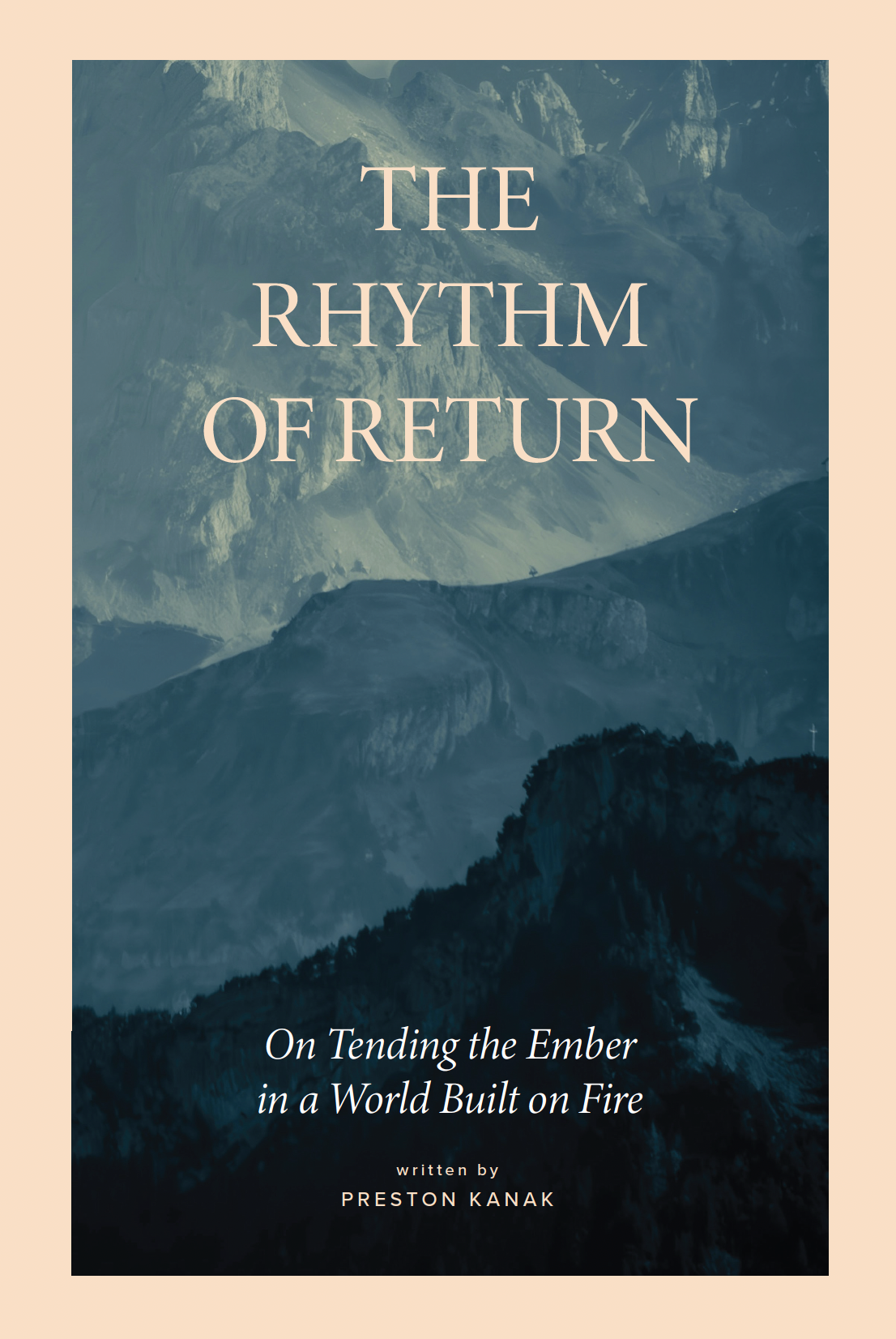
Many of these reflections started as small observations—moments that surfaced while building projects, raising a family, navigating unexpected challenges, or simply noticing how quickly time moves when you aren’t paying attention.
The more I wrote them down, the more I realized they were part of a larger conversation.
Not about productivity, or optimization, or the endless search for the perfect system—but about something quieter. About building a life that feels intentional. About staying curious enough to keep evolving even when the path isn’t perfectly clear.
Over time those ideas grew into something bigger than a single post.
They eventually became the foundation for a book I’ve been working on, a longer exploration of the questions that sit underneath all of this: how we spend our time, how we shape our lives, and how we learn to move forward without losing sight of what matters most.
In many ways, these posts are fragments of that larger story.
Little pieces of a conversation that continues to unfold.
And like most meaningful things in life, it’s still finding its rhythm.